Hiking Gaiters for Trail Protection, Snow & Waterproof Coverage
Hiking gaiters are one of the most underrated pieces of trail protection available to outdoor enthusiasts. Whether you are keeping rocks and debris out of your trail runners, blocking snow from soaking your socks, or pushing through bug-heavy summer brush, the right pair of gaiters for hiking changes your experience on trail in ways most hikers do not appreciate until they try them. At Appalachian Outfitters, our hiking gaiters collection covers lightweight ankle options through full-height waterproof models for every condition.
What Are Hiking Gaiters and Why Do You Need Them
Hiking gaiters are protective wraps worn around the lower leg and over the top of your footwear, designed to seal the gap between your shoe or boot and your pants. That gap is where trail debris, moisture, snow, and insects enter your footwear during a hike, causing discomfort, blisters, and wet feet long before you reach your destination. A well-fitted pair of hiking gaiters closes that gap with a combination of fabric, closures, and instep straps that keep them securely in place across varied terrain and conditions.
What Gaiters Protect You From
The practical benefits of gaiters for hiking extend well beyond keeping pebbles out of your shoes. Here is what a quality pair actively blocks on trail:
- Rocks and debris: small stones, pine needles, and sand that work into footwear and cause blisters during long mileage days.
- Snow and slush: moisture that enters over the top of boots during winter hikes, snowshoeing, and early-season shoulder routes.
- Mud and wet vegetation: trail splatter and wet grass that soaks into low-cut footwear on rainy days and saturated trails.
- Insects and ticks: some gaiter models feature Insect Shield treatment that actively repels biting insects during summer hiking in wooded terrain.
- Brush and brambles: scrubby vegetation on off-trail routes that snags pants and scratches ankles on unmaintained paths.
Who Should Use Gaiters for Hiking
Gaiters for hiking are not required gear for every trail, but they become essential under specific conditions. Day hikers on groomed trails in dry weather have less need for them. Hikers venturing into snowy terrain, wet conditions, overgrown paths, or sandy desert environments will find gaiters for hiking significantly more comfortable and productive than going without. Backpackers and thru-hikers who cover significant mileage across variable conditions consistently cite them as one of the most useful pieces of gear in their kit.
See more: How to Wear Gaiters for Hiking: A Comprehensive Guide
Types of Hiking Gaiters by Height
The height of hiking gaiters directly determines how much of your lower leg is covered and, by extension, how much protection they provide. Choosing the right height comes down to the terrain you hike, the conditions you most commonly face, and the footwear you already own. Here is how the three main hiking gaiters heights compare:
Ankle and Low-Cut Gaiters
Ankle gaiters cover just the top of the foot and the lower ankle, creating a seal between your shoe and the ground without adding significant weight or bulk to your kit. They are the most popular style of hiking gaiters for trail running and warm-weather day hiking where the primary concern is keeping small debris out of low-cut shoes or trail runners rather than blocking snow or heavy moisture. Ankle gaiters are the lightest option in the category, the easiest to pack, and the fastest to put on and take off on the go.
- Best for: trail running, dry-condition day hiking, light debris protection, sandy or dusty terrain.
- Footwear match: trail runners, low-cut hiking shoes, lightweight approach shoes.
- Waterproofing: typically water-resistant or splash-proof rather than fully waterproof.
Mid-Calf Gaiters
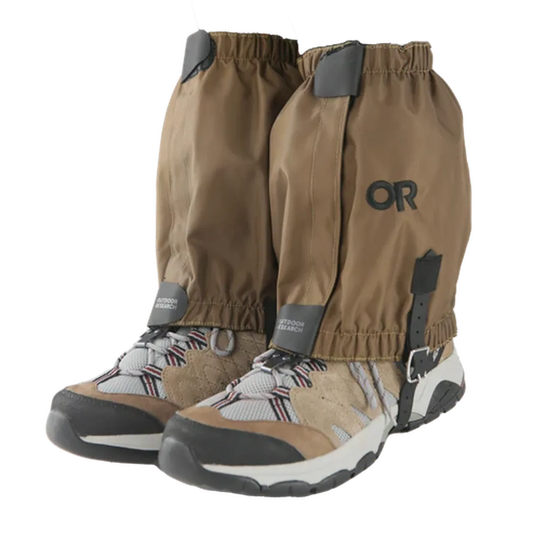
Mid-calf gaiters extend coverage from the ankle up to mid-calf, offering meaningfully more protection than ankle gaiters without the full coverage and weight of a knee-high model. They perform well across three-season hiking, shoulder season snow, backpacking routes where brush and wet vegetation are common, and conditions where debris protection matters more than maximum breathability. Many hikers find mid-calf leg gaiters for hiking the most versatile single option across a typical outdoor season, covering a wide range of conditions with one pair.
- Best for: three-season hiking, shoulder season conditions, moderate backpacking terrain, wet grass and light snow.
- Footwear match: hiking boots, mid-cut trail shoes, waterproof day hikers.
- Waterproofing: often available in both water-resistant and fully waterproof versions.
Full-Height Knee-High Gaiters
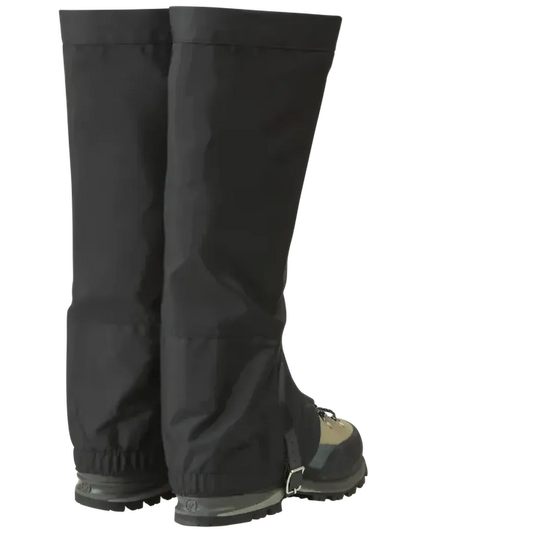
Full-height hiking gaiters run from the ankle to just below the knee, providing maximum lower leg protection for serious winter use, mountaineering, deep snow hiking, and technical backcountry terrain. Waterproof gaiters in this height class typically use GORE-TEX or equivalent three-layer membranes and feature reinforced lower panels that resist crampon contact and abrasion from sharp ice and rock. Purpose-built gaiters for hiking boots with high shafts, these are the heaviest and least breathable option, but the only reliable choice when conditions are genuinely demanding.
- Best for: winter hiking, mountaineering, snowshoeing, deep snow backpacking, alpine approaches.
- Footwear match: high-cut hiking boots, mountaineering boots, winter boots with insulation.
- Waterproofing: fully waterproof with GORE-TEX or equivalent membrane is standard at this height.
Waterproof vs. Water-Resistant Gaiters: Which Do You Need
This is the most common question buyers face when shopping for gaiters for hiking, and the answer depends entirely on your conditions. Waterproof and water-resistant are not interchangeable terms, and choosing wrong in either direction costs you either money or dry feet.
When You Need Waterproof Gaiters
Fully waterproof gaiters use a membrane such as GORE-TEX that blocks liquid water from passing through the fabric, even under sustained exposure. This level of protection is necessary for winter hiking through deep snow, extended rain hiking where sustained moisture contact is unavoidable, stream crossings, and any alpine or mountaineering use where wet conditions are the norm. Waterproof gaiters for hiking typically cost more than water-resistant alternatives and run warmer due to the membrane, which is a worthwhile tradeoff when conditions are genuinely wet.
When Water-Resistant Is Enough
Water-resistant gaiters use DWR coatings and tightly woven fabrics to repel light moisture, splash, and brief wet contact without a full waterproof membrane. They breathe better than their waterproof counterparts, weigh less, and cost less, making them the smarter choice for three-season hiking where rain is occasional rather than constant, dry-climate routes where the main concern is debris rather than moisture, and warm-weather use where breathability matters more than maximum protection. The Outdoor Research Rocky Mountain series is a strong example: not fully waterproof, but effective water-resistant protection across a wide range of trail conditions with better breathability than a membrane-equipped gaiter.
How to Choose the Right Gaiters for Hiking
Choosing the right gaiters for hiking comes down to two practical questions: what conditions will you be hiking in, and what footwear will you be pairing them with. Getting both right ensures your gaiters actually work as intended rather than fitting poorly or providing the wrong level of protection for your terrain.
Match Your Gaiters to Your Footwear
Hiking gaiters fit depends heavily on the footwear they are attached to. Shoe gaiters designed for trail runners sit low and attach differently than gaiters built to wrap around full hiking boots. Pairing the wrong gaiter height and attachment system to your footwear leads to poor fit, gaps in coverage, and gaiters that shift during the hike. Use this as your starting reference:
- Trail runners and low-cut shoes: ankle gaiters or low-cut shoe gaiters with a hook-and-loop lace attachment. Lightweight and minimal profile.
- Hiking boots: mid-cut to full-height gaiters with instep strap systems compatible with men's hiking boots and waterproof uppers.
- Mountaineering and winter boots: full-height waterproof gaiters with buckle-closure tops and crampon-compatible lower panels.
Match Your Gaiters to Your Conditions
Once you have matched your gaiters for hiking to the right footwear height, narrow your choice further by the primary conditions you encounter most often on trail:
- Dry summer trails with debris: lightweight ankle gaiters or low-cut water-resistant leg gaiters. Prioritize weight and breathability.
- Wet and muddy three-season hiking: mid-calf water-resistant or waterproof gaiters. The best all-around choice for most US trail hikers.
- Winter hiking and snowshoeing: full-height waterproof gaiters with insulated boot compatibility and a drawcord top cinch.
- Bug-heavy summer environments: Insect Shield-treated gaiters such as the Outdoor Research Bugout series for tick and mosquito protection on wooded trails.
Top Brand in Our Hiking Gaiters Collection
Our hiking gaiters collection is built around brands that have been tested and trusted by the hiking and backpacking community across real trail conditions. At Appalachian Outfitters, we carry Outdoor Research as our primary gaiter brand, selected for the breadth, quality, and trail-tested performance of their lineup.
Outdoor Research
Outdoor Research is the most widely carried gaiter brand in the outdoor retail industry for good reason: their range of hiking gaiters covers every use case from lightweight ankle options for trail runners to full-height mountaineering models, all built with construction quality that holds up across thousands of trail miles. The Rocky Mountain series, available in both High and Low profiles, has become a benchmark for gaiters for hiking at an accessible price point. Breathable nylon construction, a secure buckle top closure, and elastic bottom hem provide a reliable fit across a wide range of boot and shoe profiles without the weight of a full waterproof membrane.
Their Bugout variants add Insect Shield treatment to the same Rocky Mountain construction, making them an essential choice for hikers in tick-heavy regions including the Appalachian Trail corridor, Ozarks, and Mid-Atlantic forests during peak summer months. The Outdoor Research Bugout Gaiters and Bugout Rocky Mountain Low are both available in our collection, purpose-built for the terrain and conditions Appalachian Outfitters customers encounter most.
Why Shop Hiking Gaiters at Appalachian Outfitters
At Appalachian Outfitters, our hiking gaiters selection is chosen for demonstrated trail performance, not brand recognition alone. We stock the models that outdoor enthusiasts actually use on the trails we know, from Appalachian corridor day hikes to multi-day backcountry routes in variable weather.
Here is what you get when you shop with us:
- Trail-tested selection: every gaiter in our collection has earned its place through real outdoor use, not marketing claims.
- Complete trail protection kit: pair your gaiters with the right footwear and clothing from the same store for a fully integrated outdoor kit.
- Expert curation: our staff are active outdoors people who train on the brands we carry and can help you find the right gear for your specific adventure.
Complete your trail kit with:
- Men's outdoor footwear including hiking boots, trail shoes, and sandals that pair directly with our gaiter selection.
- Men's outdoor clothing for a complete head-to-toe trail system built from brands that perform in real conditions.
Frequently Asked Questions About Hiking Gaiters
Q: Do I really need gaiters for hiking, or are they optional gear?
Gaiters for hiking are optional on dry, groomed trails in fair weather. They become highly practical gear when you encounter snow, wet vegetation, mud, sandy terrain, or environments with heavy tick activity. Most hikers who try gaiters in conditions that call for them do not leave them at home afterward.
Q: What is the difference between ankle gaiters and full-height leg gaiters for hiking?
Ankle gaiters cover just the foot and lower ankle, keeping light debris out of trail runners and low-cut shoes. Full-height leg gaiters extend to the knee for maximum protection against deep snow, heavy mud, and sustained moisture. Mid-calf options sit between the two and cover most three-season hiking use cases effectively.
Q: Are waterproof gaiters different from water-resistant gaiters?
Waterproof gaiters use a membrane such as GORE-TEX that blocks liquid water under sustained exposure, necessary for deep snow and heavy rain hiking. Water-resistant gaiters use DWR coatings that repel light moisture and splash without a full membrane, offering better breathability and lower weight for conditions that are damp but not fully wet.
Q: Do hiking gaiters work with trail runners, or only with hiking boots?
Shoe gaiters are specifically designed to work with trail runners and low-cut footwear, attaching via a lace hook and wrapping snugly around the shoe rather than a boot shaft. Outdoor Research Rocky Mountain Low gaiters are designed to fit comfortably over a wide range of both trail runners and hiking boots, making them one of the most versatile options in our collection.
Q: How do I put on hiking gaiters correctly to get a proper seal?
Wrap the gaiter around your lower leg with the front closure facing outward. Thread the instep strap under your boot sole before closing the front. Attach the lace hook to your boot laces, then fasten the front closure from bottom to top. Secure the top closure snugly but not so tight that it restricts circulation. For a full step-by-step walkthrough, see our guide on how to wear gaiters for hiking correctly.
Conclusion
The right gaiters for hiking do one job exceptionally well: they keep the trail out of your footwear so you can stay focused on the miles ahead. Whether you need lightweight ankle gaiters for summer trail running or fully waterproof leg gaiters for winter backpacking, Appalachian Outfitters carries the protection you need from a brand that has earned its reputation on real trails. Browse the collection and gear up.