Camping Tarps and Shelters: Shop Waterproof and Lightweight Options
Whether you need a lightweight camping tarp for a thru-hike, a rain fly for your hammock setup, or a waterproof shelter for your campsite, our collection has you covered. We carry camping tarps and shelters built for real outdoor conditions, from ultralight silnylon options for backpackers to roomy campsite covers that handle Appalachian weather without a fight.
Shop Our Camping Tarps and Shelters Collection
Our collection covers the best camping tarps and shelters for every outdoor use. From purpose-built hammock rain flies and backpacking tarps to standalone campsite shelters with integrated poles, every product in our lineup is selected for reliable waterproof performance and practical setup in the field.
Why Campers Choose a Tarp Over a Tent
Camping tarps are not just for minimalists or experienced hikers. For many campers, a tarp is a smarter choice than a tent for specific trips and specific jobs. Understanding when a camping tarp outperforms a tent helps you get the right shelter for your needs.
A quality camping tarp offers several practical advantages on trail and at camp:
- Significantly lighter and more packable than a comparable tent, often by one to three pounds
- Versatile enough to pitch in multiple configurations to match weather and terrain
- Better ventilation than enclosed tents, eliminating condensation buildup on warm nights
- Works as a standalone shelter or as a supplement to an existing tent or hammock
- More affordable than a full tent at the same level of weather protection
How to Choose the Right Camping Tarp
Choosing the right camping tarp comes down to four decisions: material, coverage size, waterproof rating, and pitch versatility. Getting these right means your tarp performs across different trips and conditions rather than suiting only one scenario.
Tarp Material: Silnylon, Polyester, and Dyneema
The fabric determines weight, packability, durability, and how the tarp behaves in the rain. Here is how the main options compare:
Silnylon (siliconized nylon):
- The most popular material for backpacking camping tarps
- Lightweight and packable with good tear strength and water resistance
- Stretches slightly when wet, which affects pitch tension in sustained rain
- Best for backpackers and hammock campers who prioritize low weight at a reasonable price
Polyester:
- Heavier than silnylon but holds its shape better in humidity and rain
- Does not stretch when wet, making it easier to maintain a tight pitch in sustained rain
- Good choice for basecamp trips and car camping where weight is less critical
Dyneema Composite Fabric (DCF / Cuben Fiber):
- The ultralight premium option used by serious thru-hikers
- Extremely light and virtually waterproof with no stretch under load
- More expensive than silnylon or polyester, with the best weight-to-protection ratio available
Tarp Size and Coverage: Matching to Your Setup
Size determines how well your camping tarp protects you and how many people fit comfortably underneath. Here is a practical breakdown by use case:
Solo backpacking tarps:
- 8 by 10 feet covers one person with room for a pack and gear on the sides
- Minimum coverage for a hammock is typically 10 feet in length to extend past both hammock ends
Two-person camping tarps:
- 10 by 12 feet is the practical standard for two backpackers sleeping side by side
- Allows for a low A-frame pitch with adequate headroom and side coverage for gear
Campsite and car camping shelters:
- 12 by 16 feet and larger cover group use, campsite kitchen setups, and standing-height lean-tos
- At this size, coverage extends past a picnic table with room for chairs and gear on both sides
Waterproof Ratings for Camping Tarps
Not all tarps for camping deliver the same protection in heavy rain. The Hydrostatic Head (HH) rating measures how much water pressure the fabric resists before moisture penetrates. For camping tarps used in summer storms, a 1,500mm HH rating is adequate in most conditions. For sustained heavy rain or exposed ridgelines, 3,000mm or higher is the practical minimum.
Seam sealing matters as much as fabric rating. Most silnylon camping tarps require owner-applied seam sealer because stitching creates small perforations that allow water in under pressure. Polyester tarps with factory-taped seams skip this step entirely. Check whether your tarp comes with taped seams or requires field sealing before your first trip in heavy rain.
Tie-Out Points and Pitch Versatility
The number and placement of tie-out points determines how many configurations you can pitch your camping tarp in. A basic rectangular tarp with four corner grommets and two ridge points handles an A-frame and a lean-to but not much else. Camping tarps with 10 to 16 reinforced tie-out points distributed across the edges, midpoints, and ridgeline give you the flexibility to pitch a diamond, a closed A-frame, a plow point, and a full side-entry configuration depending on wind direction and terrain. For backpackers wanting maximum flexibility, more tie-out points are worth the slight weight addition. For hammock campers, look for tie-out placement at the midpoints and short ends that supports a proper diamond pitch.
Camping Tarp Pitch Configurations for Appalachian Conditions
Most tarp setup guides describe pitch configurations in ideal conditions on flat, open ground. Camping in the Appalachian region is rarely that straightforward. Rocky terrain, dense tree spacing, variable wind direction, and rapid-onset afternoon thunderstorms all shape which pitch works best at a given campsite. Understanding these configurations in context makes the difference between a dry night and a wet one.
A-Frame Pitch for Rain and Wind on Exposed Ridgelines
The A-frame is the default pitch for waterproof camping tarps in rain and the most reliable configuration for exposed ridgeline campsites on the Appalachian Trail. A taut ridgeline strung between two trees supports the tarp along its center, with both sides staked down at equal angles to shed water clear of the sleeper. On windy ridgelines, a low A-frame with the ridge at waist height cuts wind resistance and holds the pitch stable through gusts. In calmer conditions, raising the ridge to chest height opens up more headroom. Pitching the low end into the prevailing southwest wind provides the most reliable protection when afternoon thunderstorms roll in fast.
Lean-To for Campsite Kitchen and Fair-Weather Use
The lean-to is the fastest pitch for tarps used as a campsite kitchen cover or communal shelter in fair weather. One end attaches to a ridgeline at standing height while the opposite end is staked low, creating an open-front sloped roof. This configuration is not suited for hard rain or strong wind, but it delivers excellent shade and light rain protection for cooking areas, gear staging, and group gathering spaces. Car campers and basecamp hikers get the most use from lean-to setups where standing room matters more than storm sealing.
Diamond Pitch for Hammock Camping
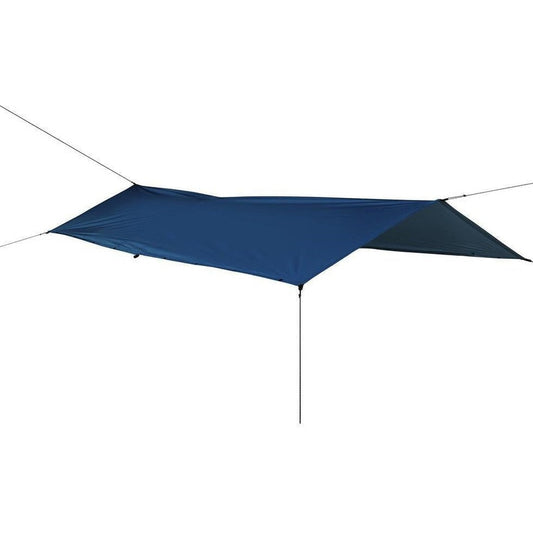
Hammock campers need tarps configured for coverage over a suspended hammock rather than ground-level shelter. The diamond pitch suspends the tarp from a single ridgeline at two opposing corners, with the remaining two corners staked outward to create a low roof over the hammock. This configuration sheds rain on all sides and holds well in moderate wind. For hammock camping in the Appalachian region, where mature hardwood forest provides reliable tree spacing, the diamond pitch deploys quickly. Pair your camping tarp with a compatible hammock from our hammocks collection for a complete overhead shelter system.
Types of Camping Tarps in Our Collection
Our shelter lineup is organized around how you use it in the field, not just dimensions and materials. Here is what we carry and who each type suits.
Lightweight Backpacking Tarps
Backpacking camping tarps are designed to minimize weight and packed volume without compromising weather protection on multi-day trips. Most weigh between 8 and 18 ounces and pack down to the size of a water bottle. These tarps pair well with a bivy sack for ground insulation and a bug net for shoulder-season trips. For hikers building a complete ultralight sleep system, browse our camping tents collection for bivies and accessories that integrate with tarp setups.
Hammock Rain Flies and Tarps
Purpose-built hammock rain flies are shaped and sized to cover a suspended hammock rather than a ground sleeper. They run longer and narrower than flat backpacking tarps, with attachment points at the ends and midpoints for quick ridgeline deployment. Many include end beaks that extend coverage past the hammock in heavy rain. Pair your rain fly with a hammock from our hammocks collection for a compatible overhead system.
Campsite and Car Camping Shelters
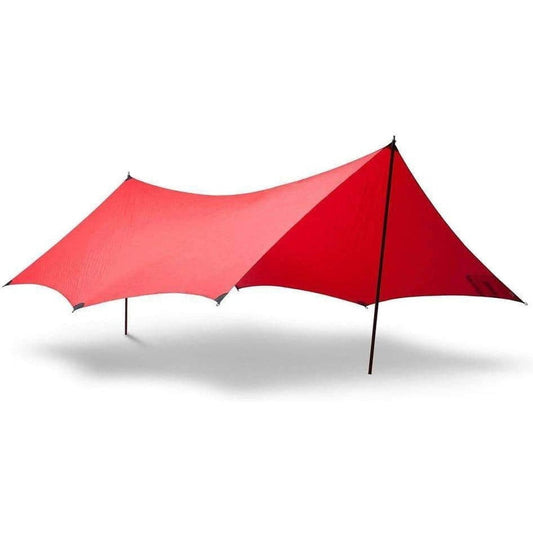
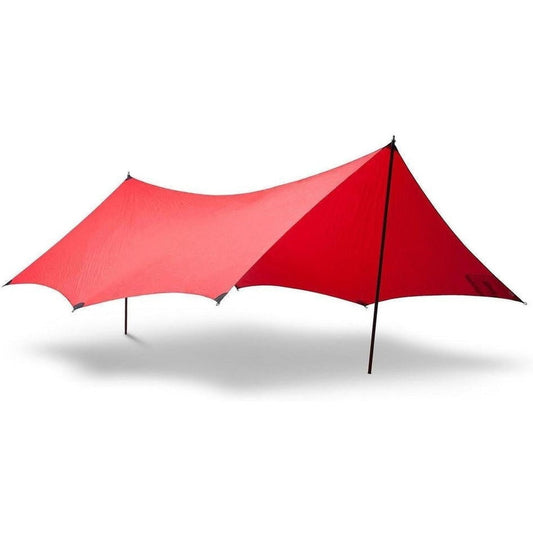
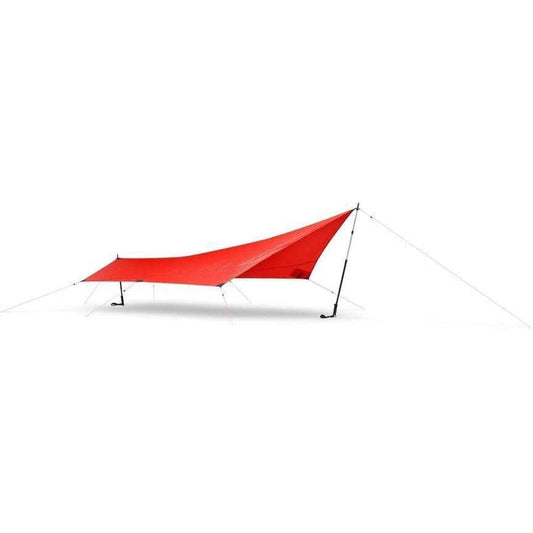
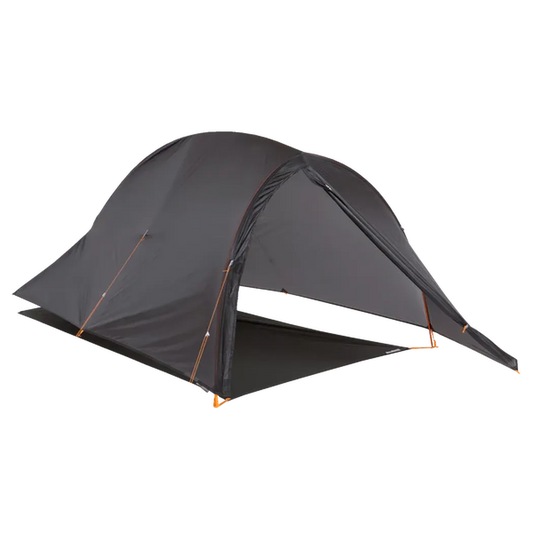
Larger campsite shelters handle use where standing room and wind stability matter more than packed weight. Integrated pole systems let you set up without trees, which is useful on open or exposed sites. At 12 by 16 feet and larger, these tarps shelter a full camp kitchen, seating area, and gear storage under one cover.
Our Best-Selling Camping Tarps
These are the camping tarps our customers reach for most, organized by how they camp.
- Ultralight silnylon backpacking tarps: the lightest waterproof camping tarps in our lineup, weighing under 16 ounces with multiple tie-out points for flexible configuration on any trail.
- Hammock rain flies: purpose-sized camping tarps for hammock setups, with end beaks and midpoint attachments for full coverage in sustained rain.
- Mid-size rectangular tarps: versatile 10 by 12 foot camping tarps that work equally well as a two-person backpacking shelter or a solo campsite kitchen cover.
- Campsite shelter systems: larger footprint camping tarps with integrated poles and guy lines for car camping setups that do not depend on nearby trees.
Browse the full collection above and filter by size, material, and use type to find the right shelter for your next trip.
Why Shop Camping Tarps at Appalachian Outfitters
Appalachian Outfitters is a specialty outdoor retailer built around the trails and terrain of the eastern United States. We carry camping tarps selected for the conditions our customers actually face, not specs that only look good on paper.
- Expert-curated selection of camping tarps with brands chosen for proven waterproof performance and durable construction on real trails.
- Appalachian terrain knowledge from a team familiar with the rain patterns, tree spacing, and campsite conditions across the AT corridor.
- Flat rate $9.95 shipping or free shipping on orders over $99 with code FREESHIP99 at checkout.
- Gear pairing guidance to help you match your camping tarp to a complete shelter system, including accessories from our tents and shelters accessories collection.
Frequently Asked Questions About Camping Tarps
These are the questions our customers ask most when shopping for camping tarps. If your question is not covered here, our team is happy to help.
What size camping tarp do I need for 2 people?
For two people sleeping side by side under a camping tarp, a 10 by 12 foot tarp is the practical standard. That size gives both sleepers full coverage under a low A-frame pitch with enough margin on the sides to keep gear and boots dry. If you are using large sleeping pads or bags that extend to the edges, size up to a 10 by 14 foot tarp for a more comfortable margin.
Are camping tarps actually waterproof?
Quality camping tarps with an HH rating of 1,500mm or higher provide reliable waterproof protection when pitched correctly and seam-sealed. Pitch angle matters as much as fabric rating. A low, taut A-frame with proper runoff drainage stays dry through sustained rain where a loose or poorly angled tarp would not. The most common cause of water entry is insufficient pitch tension, not fabric failure.
What is the difference between a camping tarp and a rain fly?
A camping tarp is a flat or shaped waterproof sheet with multiple tie-out points for versatile ground or hammock shelter use. A rain fly is sized and shaped for a specific tent or hammock model with matched attachment points. The practical difference is flexibility: a camping tarp reconfigures across multiple setups and uses, while a dedicated rain fly serves one product in one configuration.
Do I need a groundsheet with a camping tarp?
A groundsheet is strongly recommended when sleeping under a tarp rather than inside a tent. Without a tent floor, ground moisture transfers into your sleeping pad and bag. A lightweight Tyvek sheet or dedicated groundsheet keeps your sleep system dry. For hammock campers, a groundsheet is unnecessary since you are suspended off the ground.
What is the best camping tarp for a hammock?
The best tarps for hammock use are purpose-built rain flies at least 10 feet long with tie-out points at the short ends and midpoints. End beaks that extend past the hammock significantly improve rain coverage during storms. For Appalachian hammock camping, a silnylon or polyester rain fly in the 10 to 11 foot range with a center ridge and end beak handles rain and wind without excess weight.
Can I use a camping tarp without trees?
Yes. Camping tarps pitch using trekking poles, shelter poles, vehicle racks, or structural anchor points when trees are unavailable. Trekking pole setups are the most common option for backpackers on open ridgelines or above treeline. Both the A-frame and lean-to adapt well to pole setups as long as poles are staked securely and guylines are tensioned to keep them stable under load.
The right camping tarp gives you a shelter system that adapts to the terrain and weather rather than one that locks you into a single setup. Explore our full collection of camping tarps and shelters above, filter by material, size, and use type, and reach out to our team if you need help choosing the right tarp for your next trip.

 Sold out
 Sold out
 Sold out