Camping Axes and Hatchets: Find the Best Axes for Camping and Bushcraft
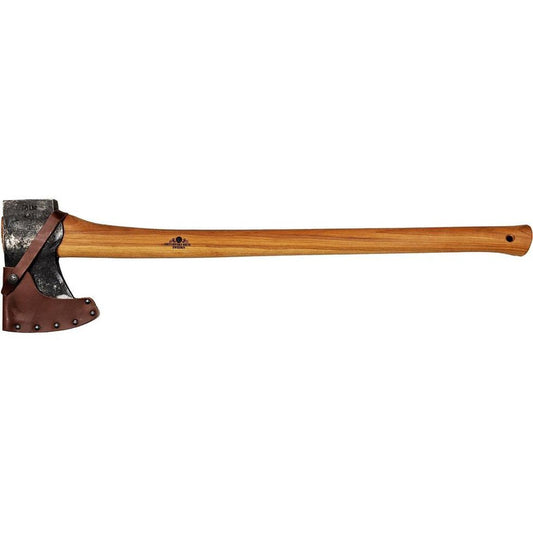
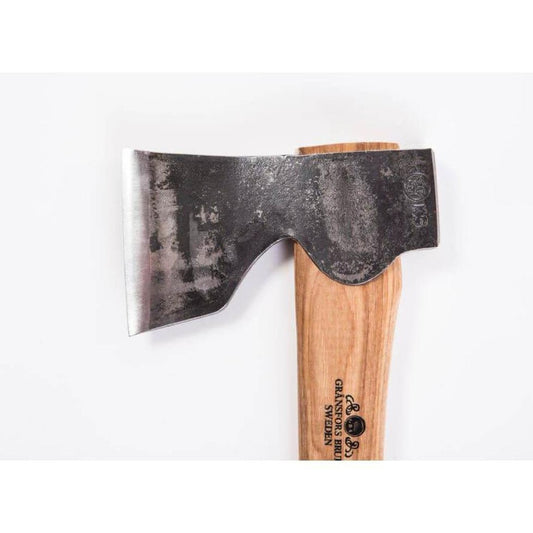
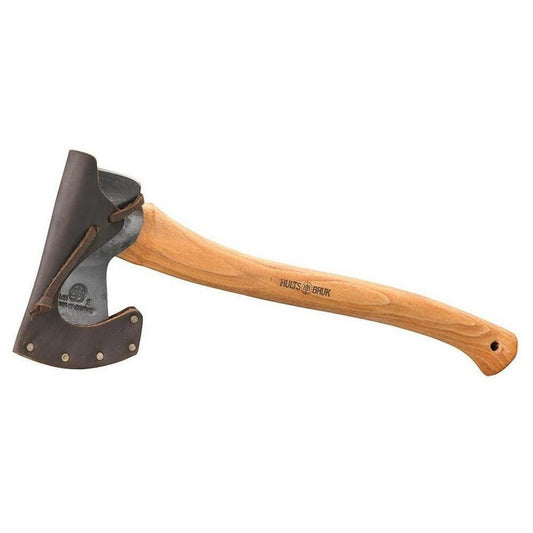
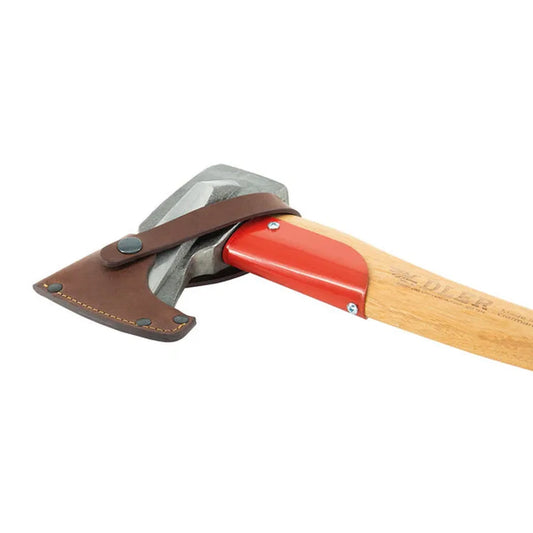
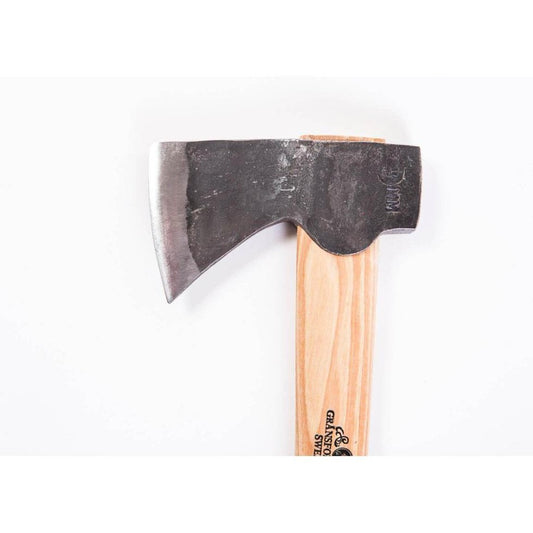
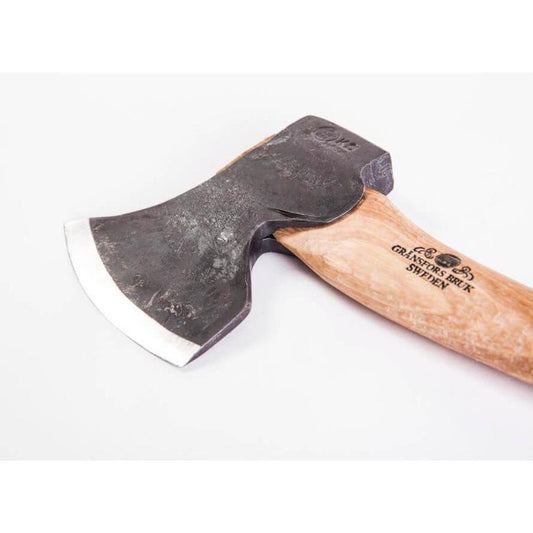
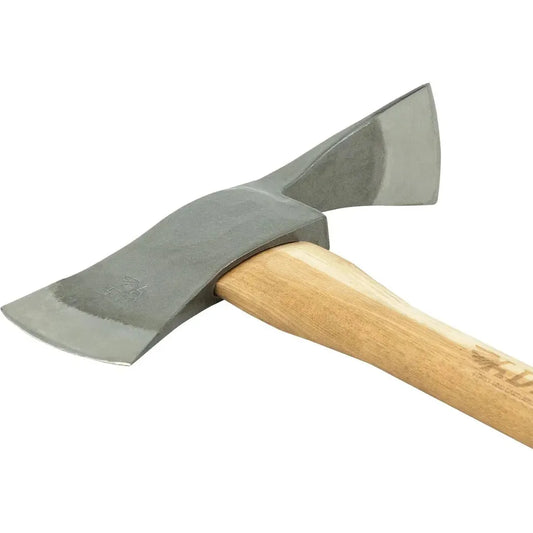
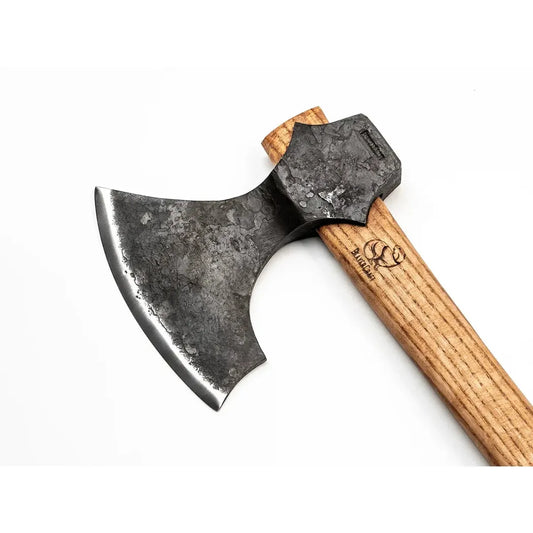
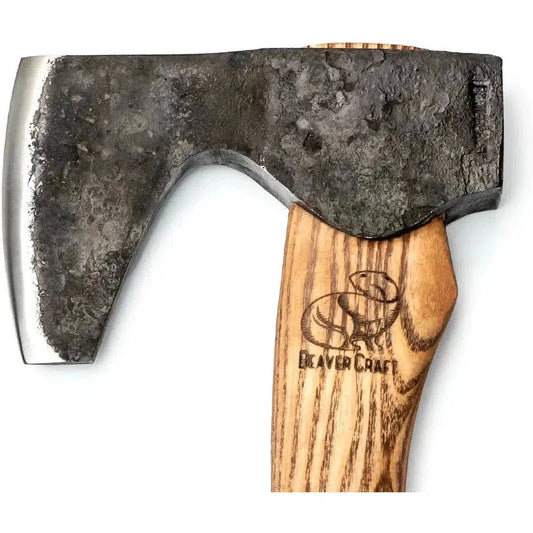
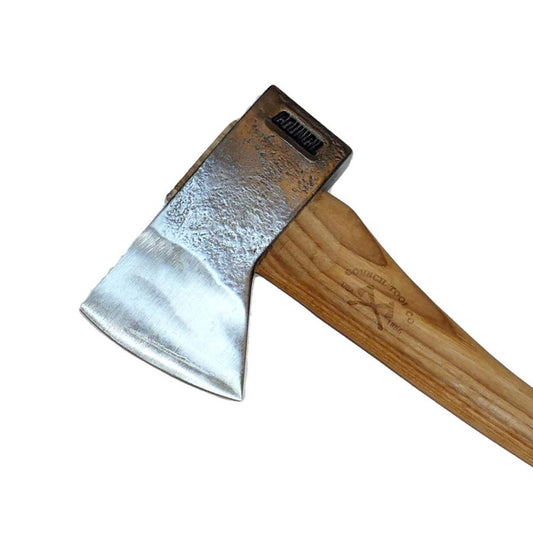
Whether you need a lightweight hatchet for splitting kindling on a backpacking trip or a forged camp axe to process firewood at a basecamp, the right chopping tool makes a real difference around camp. Our camping axes and hatchets collection carries everything from compact trail hatchets to premium hand-forged axes from Gransfors Bruk, Hults Bruk, and Adler, built for the demands of serious outdoor use.
Shop Our Camping Axes and Hatchets Collection
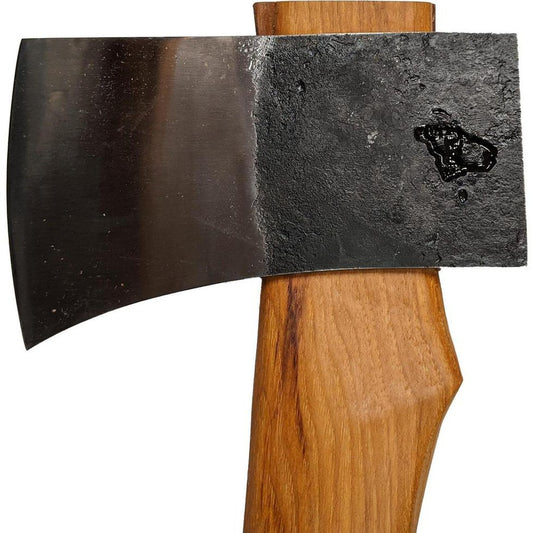
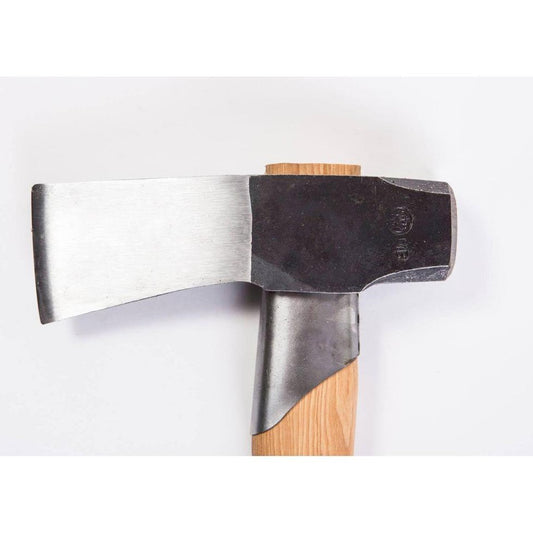
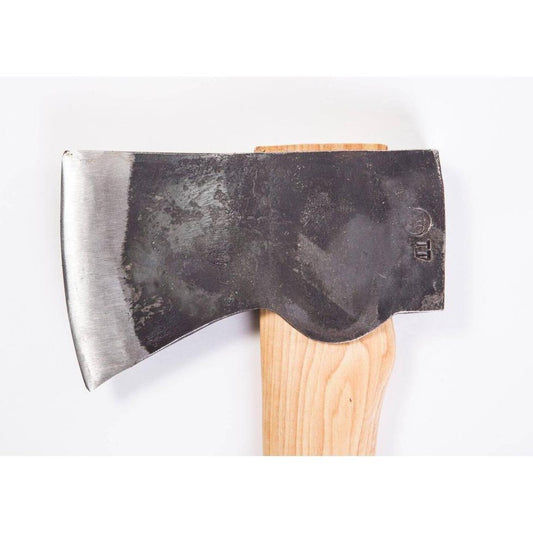
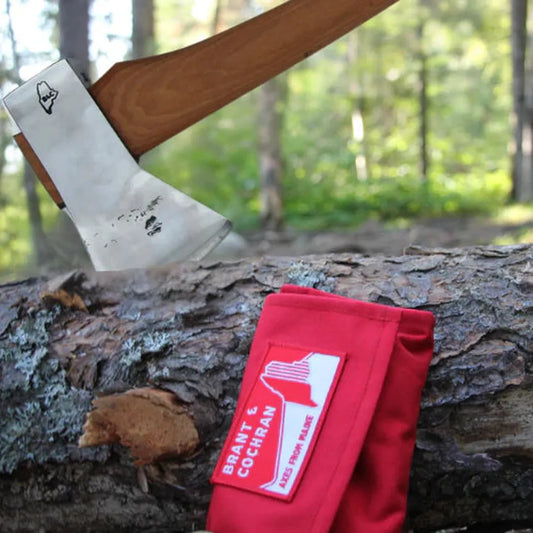
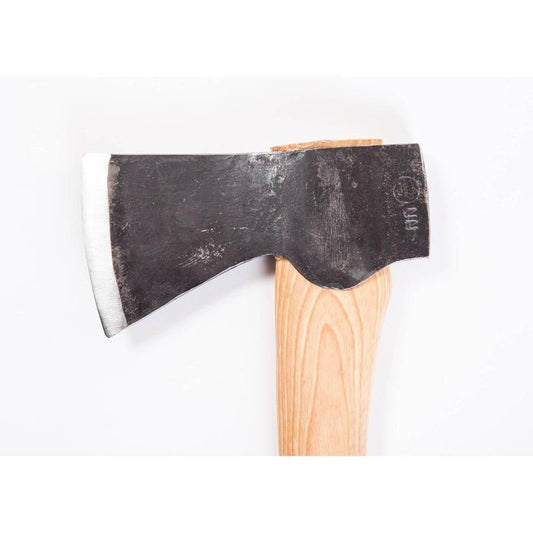
Our collection of the best camping axes includes hatchets, camp axes, small forest axes, and splitting tools from trusted brands with proven track records in the field. Every tool in our lineup is selected for steel quality, handle construction, and practical performance across the wood-processing tasks that actually come up at camp.
What a Camping Axe or Hatchet Actually Does at Camp
A camping axe is not a single-purpose tool. Splitting kindling, breaking down branches, driving tent stakes, and clearing brush are all tasks a well-chosen axe handles without needing a second tool. The key is matching the right style to the jobs you actually need to cover at camp.
Camping Axe vs Hatchet: Choosing the Right Tool
The right choice between a hatchet and a larger camp axe depends entirely on how you camp and how much wood you need to process.
Hatchets: The Go-To Tool for Most Campers
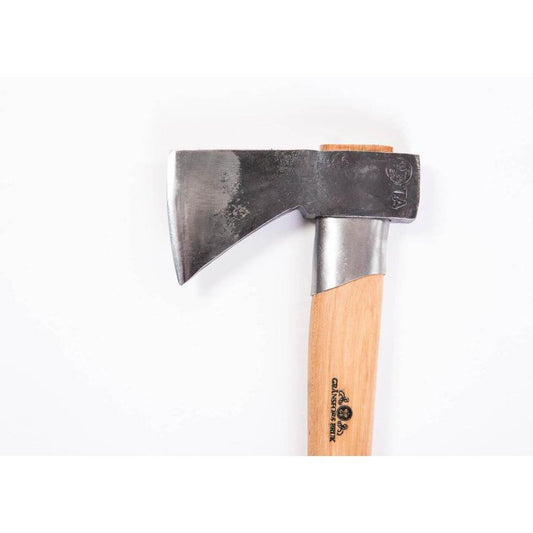
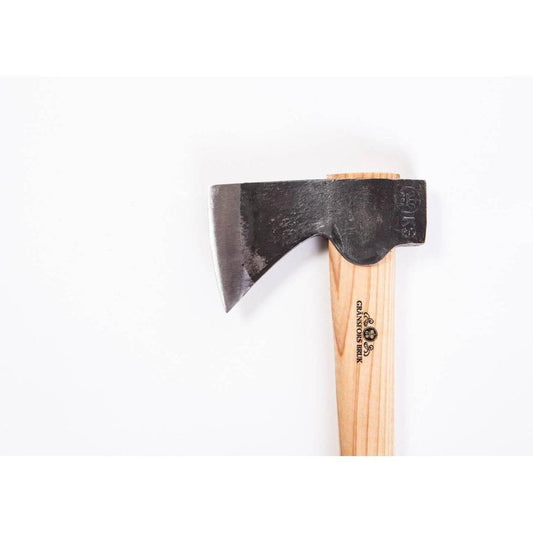
A hatchet measures 10 to 16 inches in total length with a head weight of around 1 to 1.5 pounds. Designed for one-handed use, hatchets handle the majority of camp tasks: splitting kindling from pre-cut campground logs, light chopping, driving tent stakes, and carving. For backpackers, a quality hatchet weighing 1.5 to 2 pounds is the most practical chopping option. Most campgrounds sell pre-split rounds, and a hatchet turns those into kindling without trouble.
Camp Axes: Power for Serious Firewood Processing
Camp axes run 18 to 24 inches with head weights of 1.5 to 2.5 pounds and total weights between 2.5 and 4 pounds. The longer handle generates leverage that multiplies swing force, which makes a meaningful difference when processing larger diameter logs into usable firewood. For car camping trips where you drive in with your own wood supply, or basecamp operations where you process multiple evenings of fuel, the extra weight of a camp axe pays off in efficiency. You will split a given amount of wood in significantly fewer swings compared to a hatchet.
Small Forest Axes: The Versatile Middle Ground
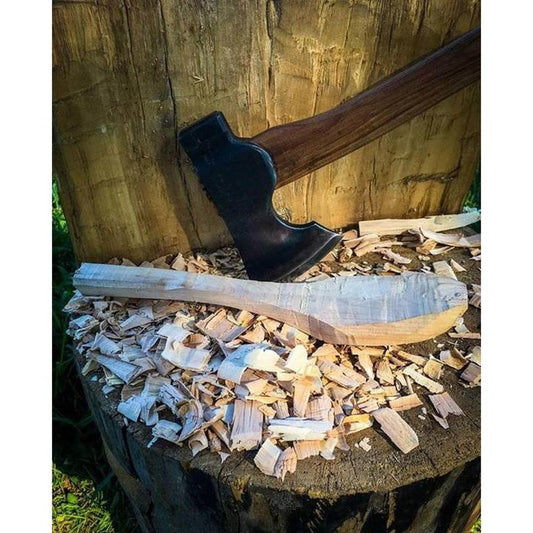
Small forest axes run 18 to 21 inches and can be used one or two-handed. They offer the detail capability of a hatchet alongside meaningful splitting power, making them the preferred tool for bushcraft-oriented campers who want a single versatile axe for chopping, carving, limbing, and shelter tasks.
What to Look for When Buying Camping Axes and Hatchets
Three factors separate camping axes that hold up for years from ones that disappoint after a season.
Steel Quality and Edge Retention
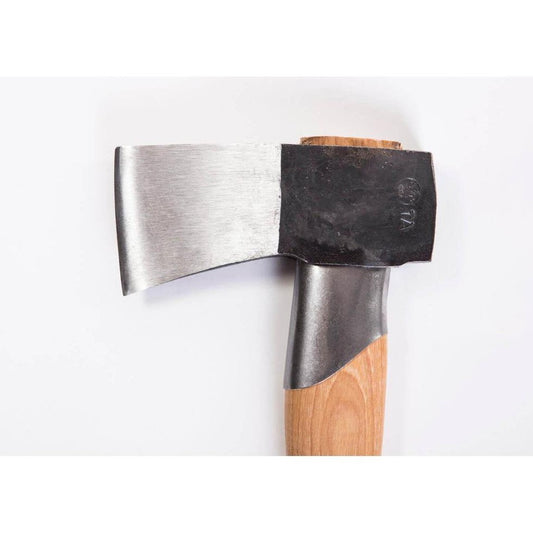
Forged steel, shaped under pressure, produces a denser grain structure than stamped or cast alternatives. Quality camping axes from Swedish and German heritage brands use high-carbon steel that holds a working edge through repeated hardwood contact without chipping or rolling. Stamped steel works for occasional use but dulls faster under sustained hard use. If you camp frequently or process serious firewood volumes, forged steel is the practical choice.
Handle Material: Hickory vs Fiberglass
Hickory absorbs shock better than any synthetic material, transmits feedback naturally, and can be replaced if it cracks. The tradeoff is maintenance: a hickory handle needs periodic oiling to prevent drying and is vulnerable to overshooting the log and striking the ground. Fiberglass and composite handles require no maintenance, resist moisture without treatment, and withstand missed swings without damage. They are heavier, transmit more vibration, and cannot be replaced if they break. For casual campers who want zero-maintenance tools, composite handles are a practical choice. For bushcraft-oriented users who want repairability and traditional feel, hickory remains the right material.
Head Weight and Balance
A properly balanced camping axe feels like an extension of your arm. Hold it at the end of the handle at horizontal. A well-balanced tool requires minimal effort to hold that position. Head-heavy axes fatigue the forearm quickly and make controlled work difficult, so balance matters as much as raw head weight when choosing.
Camping Axes Built for Appalachian Hardwood Conditions
Most buying guides for camping axes are written without reference to the specific wood types a camper actually encounters. In the Appalachian region, the dominant species at established and backcountry campsites include oak, hickory, sugar maple, and black birch. These hardwoods are significantly denser and more resistant to splitting than the softwoods common in western camping destinations.
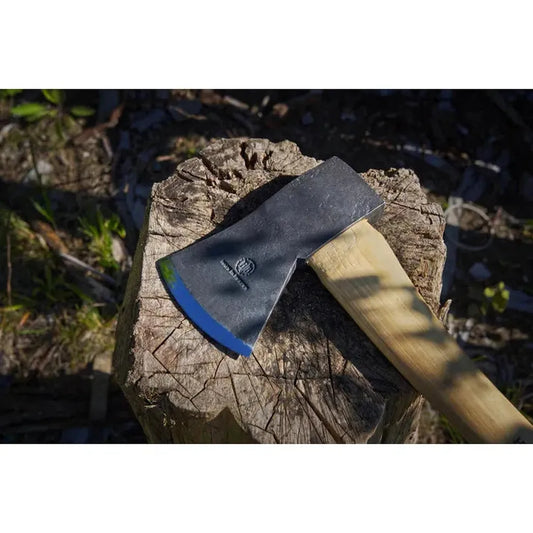
Processing Appalachian hardwood requires a camping axe with a forged high-carbon steel head that holds its edge under repeated impact with dense grain. Bit geometry matters too. A thinner, more acute edge grinds through hardwood more efficiently than a blunt convex grind designed for softwood splitting. Cheap stamped-steel camping axes lose their edge within a single firewood processing session against Appalachian oak and require frequent resharpening to remain functional. A quality forged-steel axe from a heritage brand handles the same hardwood across multiple seasons with periodic touchup sharpening rather than full re-grinds.
Why Heritage Brands Make a Difference
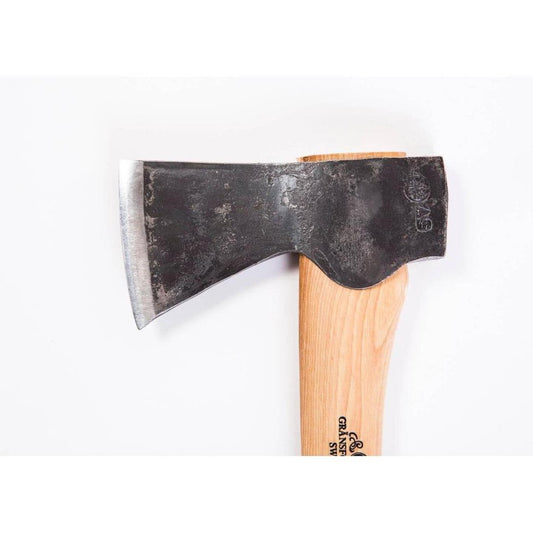
Gransfors Bruk has been forging axes in Sweden since 1902. Hults Bruk traces its foundry to 1697. Adler has operated in Germany for over a century. These brands represent generations of accumulated knowledge about steel selection, heat treatment, and head geometry that shows up in how the finished tool performs and how long it lasts.
A hand-forged camping axe from one of these brands costs significantly more than a mass-market alternative, and the difference is real: edge retention is longer, head-to-handle fit is tighter, and geometry is optimized for actual wood-processing performance. For campers who expect their axe to last decades rather than seasons, the investment is straightforward to justify. Browse our Gransfors Bruk collection for a full selection of hand-forged Swedish axes from wildlife hatchets to small forest axes.
Caring for Your Camping Axe
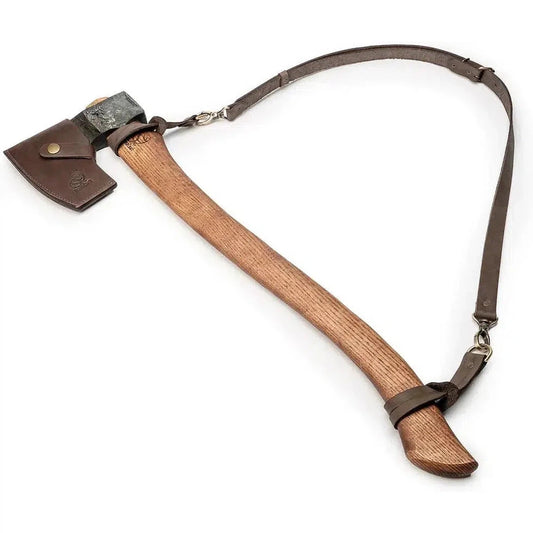
A quality camping axe maintained correctly will outlast any piece of gear in your kit. Three habits cover the essentials: keep the edge sharp with a file and finishing stone after hard sessions, protect hickory handles with raw linseed oil two or three times a year to prevent drying and cracking, and always travel with the sheath on to protect both the edge and everything else in your pack. Browse our sheaths collection for leather axe sheaths and hatchet covers sized for the tools we carry.
Our Best-Selling Camping Axes and Hatchets
These are the camping axes our customers reach for most, organized by use case and camping style.
- Compact backpacking hatchets: lightweight camping axes under 2 pounds for trail use, kindling splitting, and camp tasks where pack weight is a primary constraint.
- Heritage hatchets from Gransfors Bruk and Hults Bruk: hand-forged Swedish camping axes that handle Appalachian hardwoods without losing their edge across an entire trip.
- Mid-size camp axes for car camping: 18 to 22 inch camping axes in the 2.5 to 3.5 pound range for processing firewood efficiently at drive-in campsites.
- Bushcraft and small forest axes: versatile one-or-two-handed camping axes for campers who want a single tool for chopping, carving, limbing, and shelter work.
Browse the full camping axes and hatchets collection above to filter by brand, size, and handle material.
Why Shop Camping Axes at Appalachian Outfitters
Appalachian Outfitters is a specialty outdoor retailer with deep roots in the tools and terrain of the eastern United States. We carry camping axes from the brands serious outdoorspeople trust.
- Curated selection from Gransfors Bruk, Hults Bruk, Adler, Fiskars, Estwing, and Council Tool, chosen for steel quality and long-term value.
- Appalachian terrain knowledge from a team familiar with the hardwood conditions that separate a capable camping axe from one that disappoints.
- Complete camp tool kit: pair your camping axe with a saw and knife from our knives, saws, and axes collection for a full wood-processing setup.
Frequently Asked Questions About Camping Axes
These are the questions our customers ask most when shopping for camping axes and hatchets. If your question is not covered here, our team is happy to help.
Do I need a camping axe or a hatchet?
A hatchet handles the majority of camp tasks including kindling splitting, tent stake driving, and light chopping. A camping axe earns its extra weight if you regularly process larger diameter firewood rather than buying pre-split campground wood. When in doubt, start with a quality hatchet. It covers more than 90 percent of camp wood tasks.
What is the best camping axe for beginners?
A mid-size hatchet in the 14 to 16 inch range with a fiberglass handle and forged steel head is the most practical starting point. Fiberglass handles require no maintenance and resist damage from missed swings. Brands like Fiskars and Estwing offer well-balanced camping axes at approachable prices that hold up well for years before a beginner is ready to invest in a premium heritage tool.
How heavy should a camping hatchet be?
A practical camping hatchet falls between 1.5 and 2.5 pounds total. Under 1.5 pounds works for backpackers with minimal wood-processing needs but sacrifices splitting power. Above 2.5 pounds approaches the range where a short camp axe offers better leverage for the same weight.
Are forged axes better than stamped axes?
For regular outdoor use, forged camping axes outperform stamped alternatives in edge retention and durability. The forging process aligns the steel grain structure under pressure, producing a head that holds its edge longer and resists deformation better. The difference is most apparent when processing hardwoods across multiple days.
How do I sharpen a camping axe in the field?
Use a mill bastard file to remove burrs and reshape the edge, followed by a pocket whetstone to refine the finish. Work from the shoulder of the bevel to the edge in smooth strokes, maintaining the existing bevel angle. A well-maintained camping axe needs five to ten minutes of touchup rather than a full regrind.
What camping axe brands does Appalachian Outfitters carry?
Our camping axes collection includes Gransfors Bruk, Hults Bruk, Adler, Fiskars, Estwing, and Council Tool, among others. Contact our team for availability and recommendations on specific models.
The right camping axe is a tool you will reach for on every trip and carry for decades if you choose it well. Explore our full collection of camping axes and hatchets above, match your choice to your camp style and the wood conditions you actually face, and reach out to our team if you need help choosing between a hatchet, camp axe, or small forest axe for your next outing.